
Frankly, I’m tired of being a role model for femme fatales. Not everyone can pull off my new bed head look, with fat fuzzy slippers, schlepping in robe and flannels, and still have men come to my door, begging for my attention. It’s exhausting, I have to say.
So now, here I am, sitting on my office trying with my cache of absolutely must haves next to me: Sims games, laptop, stacks of magazines and books I really want to read, camera, pens, Cheetos, ginger snaps, water … the list goes on. I need to get my widening hind end up and figure out what I used to do before, when company was coming. Do I move the magazines into one huge pile? Or shuffle them under the ‘devil may care’ casual draping of the couch afghan, that is really solid and will impale anyone thinking they can sit there.
Well, I’ve company coming so something has to be done. Even washing parts of my bustier (maybe that will put an end to those pesky winter indoor flies?? ) and using my lady-like pick up stick to put items – one at a time – into the washer. That will be 2 hrs easily.
Brush baby powder through my hair to puff it up, or risk showering. I’m tellin’ ya, it’s a burden I’ve had all my life, and just now realize what a silly facade life styles can be. But I’m not fully convinced, just yet. Ask all the woman of my age that although we started feminism, we still think like Donna Reed.
Oh, and the constant stream of gentlemen callers? Mail man, priest, UPS, Fed Ex and the adorable Knights of Columbus who bring me fresh fish on all the Fridays of Lent, with mac & cheese, spuds 2 ways, coleslaw, and breadsticks. See? Moving that carton can be crossed off as soon as I add it to my expanding ‘to do’ list. These days no matter what I do, it goes on the list AFTERwards. Impresses friends and family on all I did. Got to use my femine wiles once in awhile. Use it or lose it … (tell that to my brain)
Really, really am getting up. Looking lovely, I might add ;o)
Blessin’s, V
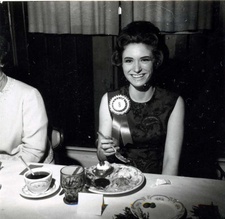
My lunch. Just something I casually threw together in only 8 hrs.That’s my neighbor next to me. By the way, I stopped wearing my ribbon a few weeks ago. I decided it was a little gauche, especially while lounging at home.


Latest Comments